
Prathamesh Themdeo | Jayendra Muley
While leading our own life responsibilities towards society. There are many examples in the history where people sacrificed their comfort in many ways for the betterment of society. Mahatma Gandhi used to say “You can kill a person but you cannot kill their thoughts”. With this context, let us have a glance at how some people despite being in prison, contributed to humanity.
Mandalay, 1909:
Lokmanya Bal Gangadhar Tilak known as ‘The Father of Indian Unrest’ because of his revolutionary thoughts and huge following that ignited the nationalist movement throughout the country. His straight forward and influential columns in the newspaper Kesari (Marathi) and Maratha (English) used to critic British Raj fearlessly. Lokamanya was sentenced to Jail by the British court 3 times (1897, 1909 and 1916) under sedition charges. In 1909 judicial trial, when he was sentenced to the imprisonment for 6 years with the jury vote of 7:2, he was asked if he had anything to say. Tilak said:
“All that I wish to say is that, despite the verdict of the jury, I still maintain that I am innocent. There are higher powers that rule the destinies of men and nations, and I think, it may be the will of Providence that the cause I represent may be benefited more by my suffering than by my pen and tongue.”
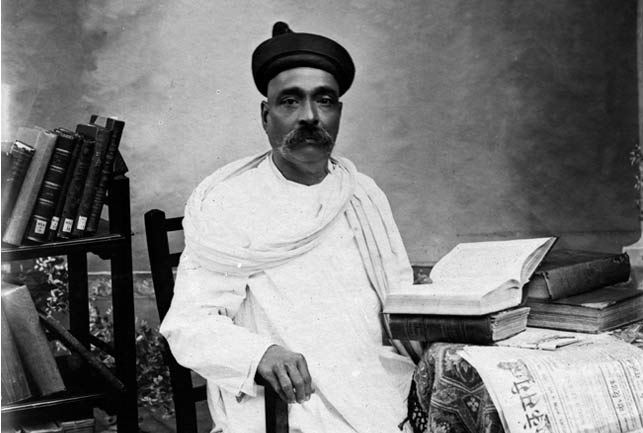
Following this argument, Tilak created one of the gems in the world of philosophy- ‘Gita Rahasya’ during his time in jail at Mandalay, Burma (now Myanmar). This book critically analyses the real meaning of Bhagvat Gita and its relevance in the present time. The book interprets and supports the path of Karma Yoga (Path of Action) in Bhagavat Gita. It criticizes the path of Bhakti and Gnyan as those were irrelevant in modern India according to him. According to him, western energism was rajasa (emotional) whereas Indian culture was Satvika (intelligent). Therefore, India needed her own philosophical framework which would show the correct path to Indians in the present time, also which will not be partial for any caste or religion. This was the very motive of Lokmanya to write Gita-Rahasya. He was introduced to Gita at the age of 16 when he used to chant it for his bedridden father. Although he was not able to interpret the meaning of Gita at such a small age, he searched its meaning throughout his life and later presented it in the most beautiful way. Tilak wrote this book (about 400 pages) using a pencil. At the time of his release from jail, British officials seized his manuscript by making allegations that those manuscripts were the plans for future terrorism. However, manuscripts were returned to Tilak after some month’s investigation. It is said that some parts of the manuscript were not returned to Tilak. These parts were written again by Tilak and the book was finally published in 1915.
Cellular Jail, Andaman 1911:
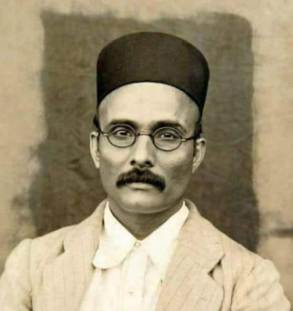
He was having all-time in the world for whatever he wanted to do while peeling off the coconut he was trying to compose poetry but as a learned poet, he wanted it to composed in the specific ‘Chhanda’ (छंद). When poetry follows certain rules in Indian Languages it is known as Chhanda. He wanted his poetry to be composed in Anushtubh Chhanda in which ‘The Ramayana’ was written. He tried to recite all the rules of poetry to recall what set of rules are applicable for Anushtubh Chhanda. Even after a long haul, he wasn’t able to recall. Just then he reminded himself that it’s run of 50 years, there is no jiffy to wrap the things, he can remember it later. But his anticipation couldn’t stop him. After getting failed to remember in all the way possible he himself created a New Chhanda/Vrutta named ‘Vinayak Vrutta’ and composed classic poems like ‘Saptarishi’ based on the Panipat War containing more than 300 verses. On later days he composed a literary marvel ‘Mahakavya’ named ‘Kamalaa’ (contain 882 stanzas) after remembering forgotten Anushtubh Chhanda. Whatever he has written may those be any poems or something else it was written without the aid of any pen and paper unlike other prisoners in mainland India. After peeling off 100s of coconuts or Extracting a bucket of oil by working on a human-driven oil mill they were not even treated as human, talking with each other was even seen as an offence sometimes. In this critical moment to release stress, he used to compose poetry. While working on filed prisoners used to collect thongs for him, when all prisoners were put in the respective cell at night he used to carve his poems on prison walls. Kamla was also written on 7 different walls of the prison. And after jotting it down he used to recite and learn it because prison cells used to get interchanged after every month. And prison walls were repainted after a year. So the validity of those poems and knowledge was just a year. Kamla was written by Savarkar, but a prisoner Ramhari from Bihar who was put in that cell after some time learned it. And after his release from Cellular Jail, he went to Mumbai and contacted the younger brother of the poet and published it with pseudonym ‘Vijanvasi’ (meaning: the exiled) even before the release of Poet. And in true sense, the prison couldn’t stop poetry of this prisoner. This prisoner was the great freedom fighter Veer Savarkar
Central Jail, Mianwali, 1929:
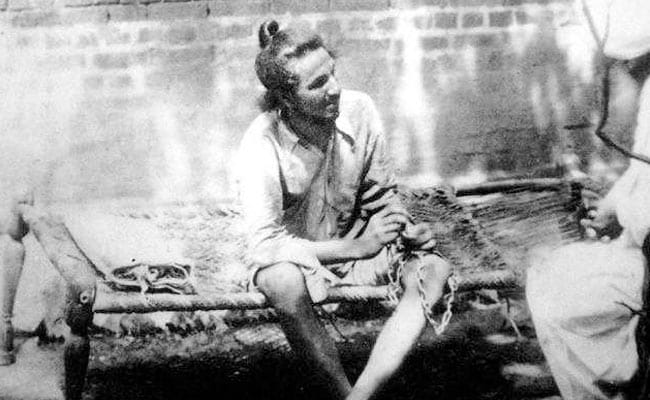
Bhagat Singh is the name that everyone knows as a symbol of bravery and sacrifice. After the Saunders murder case and bombing at the central legislative assembly in 1928, Bhagat Singh became a Young hero and synonyms to extremism. However, when he was sent to the Central Jail Allahbad, he implemented the path of Satyagraha and carried out a hunger strike against the discrimination between Indian and European prisoners. This was a remarkable movement led by him and Chanan Singh to obtain the fundamental facilities for Indian prisoners. It is said that during his time in jail, Bhagat Singh wrote 4 books, but they were destroyed. However, his diary and notes were later handed over to his family. In his 404-page jail diary which was written between September 1929 and March 1931, Bhagat Singh had written on the range of topics including communism, capitalism, social issues, political concerns and poetry. This diary reflects his intellectual maturity and deep knowledge. In 1930, when Singh was in Lahore jail, a religious man and a member of Ghadar Party, Randhir Singh in jail challenged Singh’s belief in God. His atheism was often mistaken with his vanity. To answer this Bhagat wrote an essay ‘Why I am an Atheist’ which was published in September 1931. In this essay, he justifies his atheist ideology with examples and learnings of his life.
Naini Central Jail, Allahbad : 1930s.
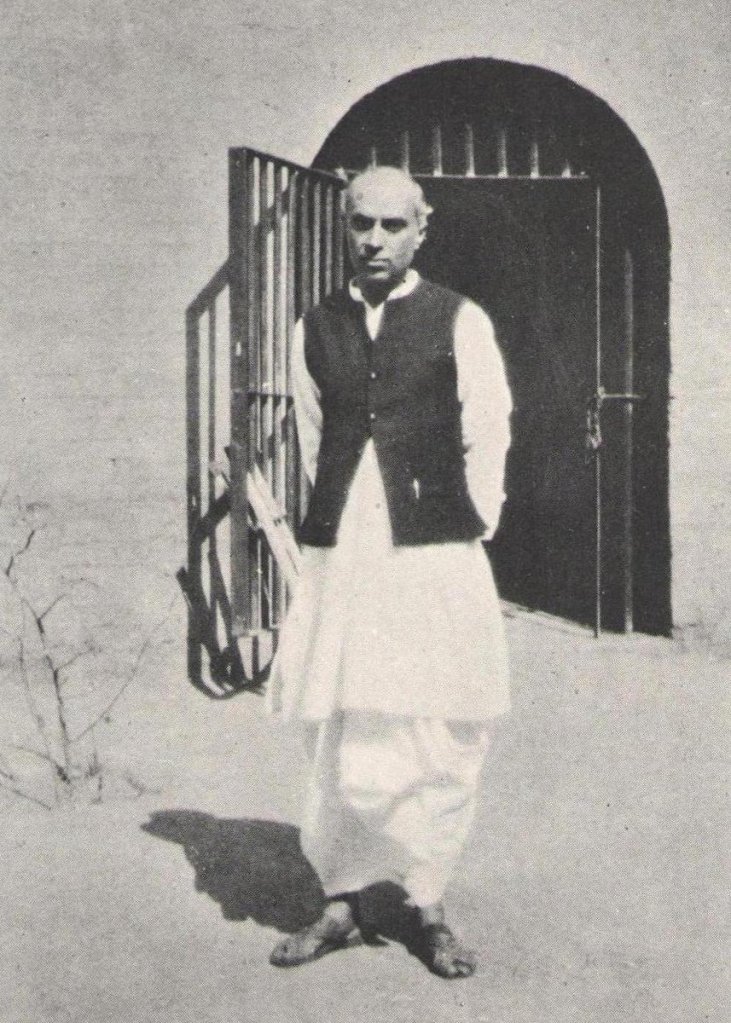
While struggling for independence, and resisting British rule in the leadership of Mahatma Gandhi, Jawaharlal Nehru was charged with the sedition. It was the time of total political unrest. And Britishers found it convenient to dump the rising young participation in jail. He was in the Naini Central Jail, Allahbad in 1930. On 17th November he wrote a letter to his young daughter Indira who was 13 years old then, that he cannot afford any material gift from prison so he is sending a letter from his heart. And this is how a great creation came to the world. ‘Glimpses of World History’ is a series of 196 letters written to his daughter Indira. Where he talks about ancient history of civilization to the recent of that time. about great kings, various cultures and many more. The letters were written from 1930 to 1933. Nehru was a social being but he used to like solitude as it was the time to explore self according to him. He has always conditioned his prison tenures in productive learning or writing. In 1942 he also wrote ‘The Discovery of India’ explaining history of India from Indus valley civilization to start of British Rule. This was the ‘Glimpses’ of Prison works of First PM of Independent India.
All the above leaders show that strong will power can defeat all forces. There are many such examples in the world where people proved the same. However, it is important to note that the legendary work that the people mentioned above had done is during their time at the prison. We know the extent of mental and physical torcher that they could have gone through in British jails. Just to relate to a smaller level. it is nothing less than being in a quarantine period for several years in a dark room, away from a native place, tolerating mental and physical torcher. But even in those conditions, they never failed to contribute to the nation. This teaches us that The purpose of history is not always to learn from the wrong things that our ancestors did, but also to realize what things they did were right.
 The Rational
Its an excellent, information…..because the generation not even tries to remember our freedom f8ghters…
LikeLike