
Prathamesh Themdeo | Jayendra Muley
On the occasion of Jashn-e-Azadi on 15th August we celebrated 74th Independence Day of our country. Current time is tough for India as well as the world. However, a powerful phrase ‘Unity is Strength’ has always shown a way out of adverse conditions. Let us look back at some major events in independent India that highlighted immense strength of unity in Indians. Most of us may be already knowing these events, but sometimes we need to recall things to get back on track!!
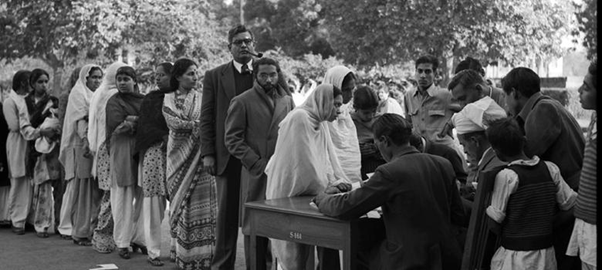
First Elections of Independent India, 1951-52:
The first remarkable event in the history of modern India where people were united for one cause was the first democratic elections of Independent India. It was the time which shaped our today’s reality. Independent India’s first elections were conducted from October 1951 to February of 1952. We accepted our constitution on 26th November 1949 and with accord to the newly formed constitution, awareness of this mega event was carried for a period up to 1951. 173 million people were eligible for voting out of 360 million people of India and out of which around 46% of people cast their vote on 489 constituencies of New India. 80 million people, coming upfront to perform their democratic duty and to show the world their worth after the ages of humiliation was a remarkable event. Undoubtedly Jawaharlal Nehru was elected, there was no opposition to congress party, still showing volunteering attitude to cast the vote made the impact which is long-lasting in each aspect. It was a receipt from the people to convey that they are capable of selecting their own ruler and their own rules. This event is the foundation of United Indian attitude which carries the sense of responsibility, and have capabilities to overthrow someone if someone shows autocratic attitude which we will witness further.
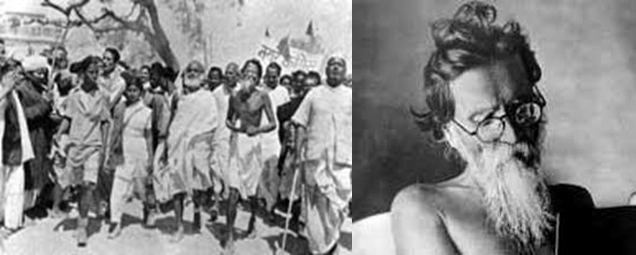
Bhoodan Movement, 1951 :
One of the boldest events of human history is the formation of Communist USSR based on the revolutionary philosophy of Karl Marx. And it happened due to discrimination between classes ‘Haves’ and ‘Haven’ts’. Those who have money, power have it in excess and those who are abstained from it don’t have anything. In the initial years of ‘Democratic India’ Communists were working with a vision to sow communism in Indian soil with democratic way. To avoid this it was important to transfer things from people who have in excess to those who don’t have, to make things equal, to destroy the boundaries of classes and most importantly to keep the soul of Democracy alive. This was done in India through ‘Bhudan Movement’ effectively. The movement was initiated by Acharya Vinoba Bhave in 1951 at Pochampally village (now in Telangana). Landlords were urged to donate (दान) the land (भू) and it was distributed between landless people and Labor. Some of the kings and Princely states participated in the movement as a doner, Nizam of Hyderabad donated 14000 acres of Land whereas Raja of Ranka donated 1 Lakh acres. Vinoba Bhave was inspired by Gandhiji’s Sarvodaya movement and started this movement. Women played a major role in this movement to propagate the idea of Bhudan Movement all over India. Many states welcomed this movement and many leaders Like Jayprakash Narayan worked for the Bhudan Movement. This event also had a long-lasting impact, to show Indians themselves that if they stand together they will get what is theirs.
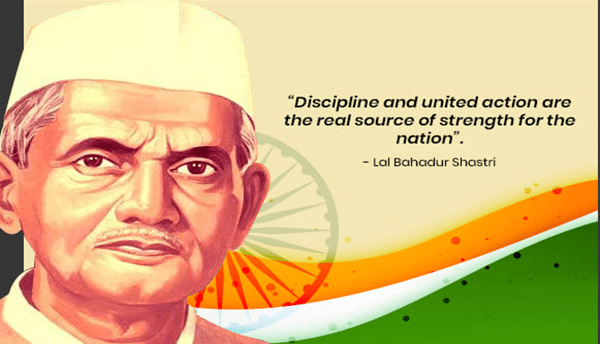
Miss a Meal Campaign,1965:
In 1964, when Lal Bahadur Shastri was the Prime Minister of India, the country faced mass starvation. The famine resulted in deaths due to lack of food, malnutrition and an overall deterioration in living standards. Riots and protests made the situation more complex. In 1965, to overcome the crisis C.Subramaniam Commission presented a new agriculture policy which focused on scientific approach in agricultural practices. The term ‘science’ in agriculture was backed by PM Shastri. However, before we could see significant results, India-Pak tensions led to war conditions and the situation became worse. Even though the US was exporting nearly 20,000 to 50,000 tonnes wheat to India, the help was insufficient and resulting in strategic pressure on India due to over-dependence on the US. To tackle this national calamity, Shastri in his speech appealed Indians to fast or skip a meal on a day(Monday) of every week. He asked to not organise parties, dinners and function to save food. Citizen across the country transformed the PM’s appeal into nationwide ‘miss a meal’ campaign. People started skipping meals and fast even for more than a day in a week. Meanwhile, import of efficient Mexican seeds and scientific agriculture encouraged farmers to produce on large scale. Thus, the unity of Indians with the vision of Jay Jawan Jay Kisan! paced the well-known Green Revolution. Today India is the exporter of food grains!
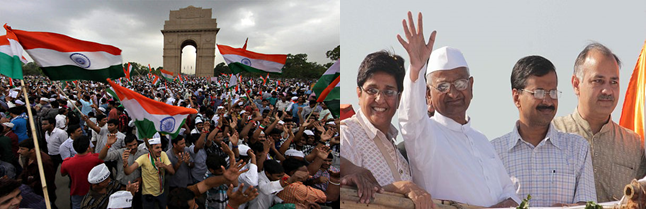
Jan Lokpal Bill anti-corruption movement, 2011:
Lokpal and Lokayukta Act is a provision to set up a body which addresses and enquires the corruption complaints and allegations on government administrators as well as legislators. The term was introduced in Indian Parliament in 1963. With 5 decades of struggle starting from 1963 as many as eight major attempts were made by different committees, ministers and activists to pass the bill. On 5 April, 2011 an activist from civil society, Anna Hazare started an indefinite fast at Ramleela ground (New Delhi) to challenge the government’s draft of Lokpal Bill and introduced ‘Jan’ Lokpal Bill (Citizen’s Ombudsman Bill) demanding revolutionary changes favouring the citizens and voters. Leaders and activists from varied fields supported the initiative. Within a few days after 5 April, it became a nationwide anti-corruption movement. People increased awareness on a large scale, protests and marches were being seen at every street of the country. Citizens belonging to every class, profession, religion and age raised voice against corruption. The whole nation saw a highly united wave which at the end brought the government to its knees. After negotiations between activists and decision-makers, an updated version of the bill was drafted to set up Lokpal. The Lokpal and Lokayukta Bill were finally passed by parliament in 2013. Today, we can see a Lokpal committee being set up to curb corruption in governance which is the result of unity against corruption.
Nibharya rape and murder case, 2012:
On the night of 16 December 2012, a 23-year old female was raped and murdered by six evil, inhuman and disgusting men in South Delhi region. The brutality associated with the case ignited the fire in the country as well as abroad. Rapid actions were taken for treatment of the victim, and criminals were arrested within 24 hours of the mishap. Unfortunately, the victim (Nirbhaya) died within 2 weeks after the assault. However, her demise propelled a huge protest not only in India but in different parts of the world. Questions were raised on women’s’ security and police protection. Candle marches were being carried out in support of the victim. The whole movement led to reviewing of women’s security laws, amendments were made in criminal laws, 6 fast track courts were commissioned for hearing on rape cases. On 20th March 2020 four criminals were hanged till death. Nirbhaya case initiated public talks regarding women’s security and rights. ‘Shahid’ Nirbhaya united us to fight against evil forces in society!!
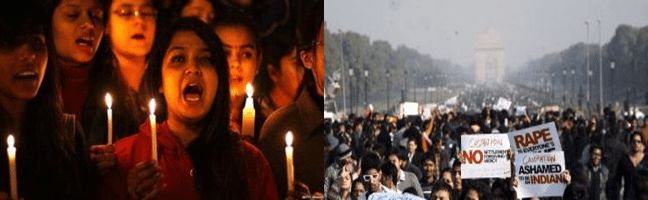
These events do not form an exhaustive list. There are many such instances in history. However, in all the above-mentioned incidents, we can observe one common thing. All these events have an entity against which we all have united. In some cases, that entity was an evil mentality while in others it was the government itself. However, the fact is that citizens united for a greater good by breaking barriers of religion, political alignments, class, age, etc. None of these events was impulsive rather they were reactive and reactions were valid as well as long-lasting. Therefore, as a society, if we are willing to bring changes, then let us stick to the side of truth and validity.
What do you think about the impulsive reactions that are seen on social media?
 The Rational
Amazing read!
What we saw earlier can be termed as kranti! in a true sense by rationaly unified act. But in todays time we can see some protests which instigates simply over a comment on a social media platform. Recent eg of Bangalore outrage , Comic comment and many more.
These protest contradicts the intent behind their demands. Lacks the foundational representation.
LikeLike
Indeed! We are aligned with the thought
LikeLike